How Often Should You Pressure Wash in Orlando?
Orlando House Washing · November 14, 2026
If you search for how often to pressure wash a house, most of the advice you find says every two years is fine. That advice is written for the average American home, and Orlando is not average. Between our humidity, our rainy season, and the amount of shade our oak trees throw over roofs and driveways, exterior surfaces here grow algae and mildew far faster than they do in drier parts of the country. A schedule that works in Ohio will leave a Florida home looking tired for a year or more before the next cleaning comes around. This guide lays out a realistic rhythm for Orlando homes, surface by surface, based on what actually grows here and how fast it grows.
Why Florida Homes Get Dirty Faster
Algae, mildew, and mold need three things to thrive: moisture, warmth, and shade. Orlando gives them all three for most of the year. Our humidity keeps siding, stucco, and concrete damp long after a rain shower passes, and afternoon storms in the summer can wet surfaces down almost every day. Add the spring pollen season, when oak pollen coats everything in a yellow-green film that holds moisture against the surface, and you have perfect growing conditions for the green and black staining homeowners see on their walls and walkways.
The north side of a home usually shows it first, because it gets the least direct sun to dry things out. Surfaces under a heavy tree canopy stay damp even longer. None of this means your home is neglected. It just means Florida homes need cleaning on a Florida schedule, not a national one.
A Surface-by-Surface Schedule
House soft wash: every 12 to 24 months. The exterior walls of your home should be soft washed about once a year in shaded or heavily wooded lots, and closer to every two years for homes in full sun with good airflow. Soft washing uses low pressure and cleaning solutions to kill algae at the root, which is safer for stucco, siding, and paint than blasting with high pressure, and it keeps the growth from coming back as quickly.
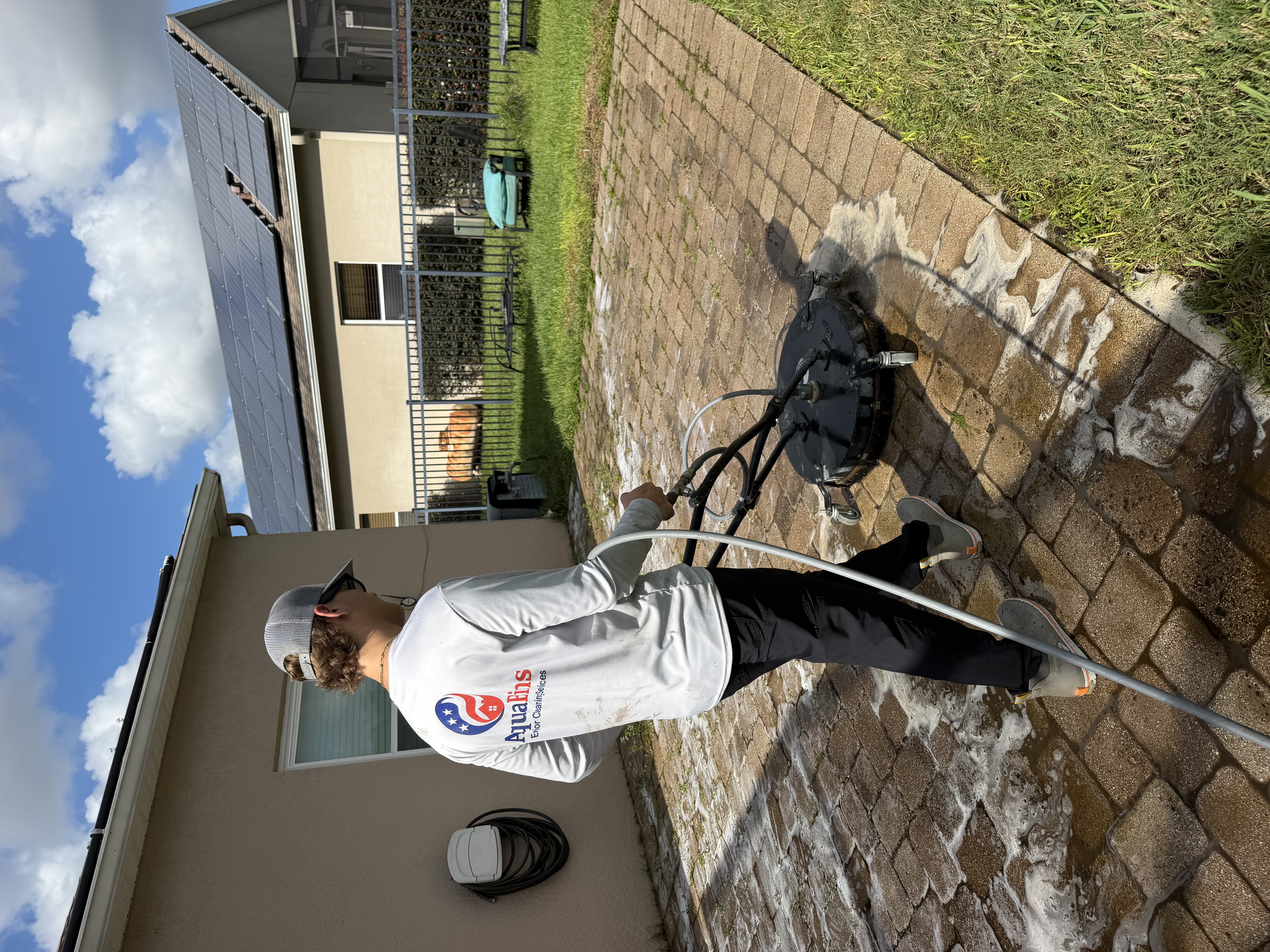
Driveway and sidewalk: every 12 to 18 months. Concrete is porous, so it holds moisture and grows algae down in the surface. Driveways and sidewalks under oak shade may need attention every year, especially where the concrete stays slick. Homes in open sun can often stretch closer to 18 months before the dark staining becomes obvious from the street.
Pool cage and pool deck: yearly. Pool screen enclosures collect algae on the frames and screens, and pool decks grow slippery fast in our climate. A yearly cleaning keeps the deck safe to walk on barefoot and keeps the cage looking bright instead of green. If algae is showing on your window frames as well, that can be addressed at the same visit, since the same growth takes hold on frames and glass in damp, shaded spots.
Fences: as algae appears, usually every 1 to 2 years. Vinyl and wood fences show green growth quickly on the shaded side. Cleaning a fence when the green tint first appears is easier and gentler than waiting until the staining is heavy and set in.
The Best Times of Year to Schedule
Timing matters almost as much as frequency here. Late spring, right after the oak pollen finishes falling, is one of the best windows, because you wash away the pollen film before summer rain bakes the growth cycle into high gear. Early fall, after the rainy season eases off, is another good window, since surfaces dry faster and the cleaning lasts longer into the cooler months. Many homeowners also schedule before the holidays, when family visits and photos make curb appeal matter more. The main time to avoid is the middle of the rainy season, when storms can interrupt the work and surfaces never fully dry.
What Shortens the Cycle
Some homes simply need cleaning more often, and it usually comes down to a handful of factors. North-facing walls that rarely see sun are the biggest one. A large oak canopy over the driveway or roofline keeps everything beneath it damp and shaded. Irrigation overspray is another common culprit, since sprinkler water hitting the same section of wall or sidewalk day after day feeds algae growth and can leave rust-colored staining from well water. Homes near lakes and ponds deal with extra humidity and airborne algae, so surfaces there tend to green up faster than homes a few streets inland. If two or three of these apply to your home, plan on the shorter end of every range above.
Signs You Have Waited Too Long
Your home will tell you when it is overdue. A green tint creeping up the siding or across the fence is the earliest sign. Black streaks and blotches on walls, driveways, and sidewalks mean the growth is well established. The most serious sign is slippery concrete, because algae-covered walkways and pool decks are a genuine fall hazard, especially after rain. Waiting until surfaces reach that stage also makes the cleaning harder, since heavy growth takes more time and treatment to remove fully than light growth caught early.
Staying on a Rhythm Pays Off
Homeowners who clean on a regular schedule almost always spend less over time than homeowners who wait for a rescue cleaning. Light, routine maintenance is faster and gentler on your surfaces than the heavy work needed to restore a home that has gone three or four years. A steady rhythm also keeps your home looking consistent from the street, which matters in neighborhoods where the HOA sends notices about mildew on siding or dirty driveways. It is much easier to answer an HOA letter with a recent cleaning date than to scramble for an appointment after one arrives.
A simple annual plan looks like this. Pick one anchor month each year, ideally in late spring after pollen season, and have the house soft washed and the pool cage and deck cleaned. Check the driveway and sidewalk at the same visit and clean them if the staining is building. Then do a quick walk-around every fall and look at the north side of the house, the shaded concrete, and the fence line. If green is showing in the fall, a mid-cycle touch-up on those areas keeps everything on track until the next anchor visit.
A Local Team on Your Schedule
Aqua Bins Exterior Cleaning Services, also known as Orlando House Washing, has been cleaning homes in Avalon Park and East Orlando since 2017, and we have earned over 690 five-star reviews on Google from local homeowners. We serve Avalon Park, Stoneybrook, Eastwood, Waterford Lakes, and the wider East Orlando area, along with Oviedo, Winter Springs, Chuluota, Lake Nona, Union Park, and Alafaya. Every job is backed by our Aqua Bins Green to Clean Guarantee, so if the green comes back sooner than it should, we make it right. When you search for pressure washing near me and want a company that works on a Florida schedule instead of a national one, give us a call at (321) 301-6168 or visit www.OrlandoHouseWashing.com to request a quote. We will help you set a rhythm that keeps your home clean year-round without overdoing it.